Why Moneyball Is Overrated: Separating Myth from Reality
When Moneyball hit shelves—and later the big screen—it reshaped how casual fans understood baseball analytics. Many fans never gave analytics a thought. It turned Billy Beane into a folk hero, made “on-base percentage” a household term, and convinced many people that the 2002 Oakland A’s had discovered a secret formula no one else understood. But while the book and film are undeniably entertaining, the Moneyball phenomenon is often overrated in terms of what it actually accomplished and what it really represented. And yes, the movie was amazing even if the theory was a bit over blown.
1. The A’s Success Wasn’t as Revolutionary as Portrayed
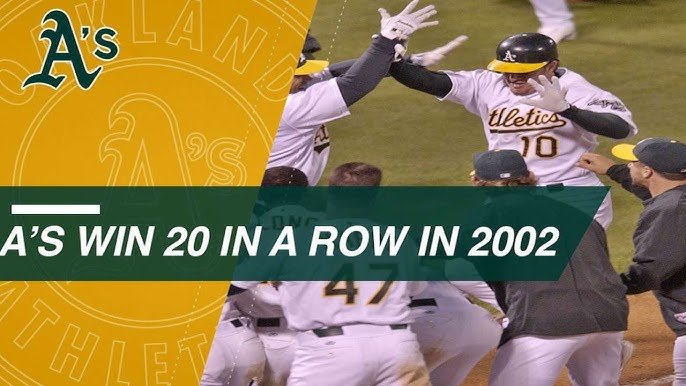
The narrative frames the A’s as a scrappy team who defeated the giants through pure statistical enlightenment. But the A’s weren’t exactly a bargain-bin roster; they were powered by one of the best pitching trios of the era—Tim Hudson, Mark Mulder, and Barry Zito—all homegrown stars who were hardly undervalued or unknown. Their dominance is downplayed to make the statistical story shine brighter. Even in the movie, they are metioned maybe once, which is strange and a glaring exclusion to the story.
2. Sabermetrics Were Not a New Discovery
The book treats sabermetrics as a revelation, but front offices had been using advanced statistics for years—just not as dramatically. Scouts, analysts, and forward-thinking executives already understood many of the principles Moneyball celebrated; Oakland was simply more open about embracing them. The A’s didn’t break new ground—they just marketed it better. Many teams may have just not talked about using sabermetrics because it wasn’t accepted by the old guard.
3. The Theory Gets Oversimplified
Moneyball reduces roster building to a single magic metric: on-base percentage. In reality, Oakland’s approach was far more complex, involving defense, pitching development, minor-league depth, financial risk management, and organizational culture. The simplified narrative makes for a cleaner story, but it’s not how front offices actually operate. Even today, simply using a Moneyball approach won’t win it all without great pitching and timely hitting.
4. The A’s Didn’t Win a Championship
The book positions the A’s as a team that “beat the system,” yet their postseason results tell a different story. Despite several strong regular seasons, they didn’t win a World Series in the Moneyball era. The playoff failures undermine the idea that the strategy provided a decisive competitive advantage. At the very least, the 2002 A’s were a Rocky story, they almost won.
5. It Sparked a Trend That Outgrew Its Own Premise
Ironically, Moneyball’s biggest legacy is that it made its own strategy obsolete. Once every team in baseball adopted analytics—and eventually built larger, better-funded analytics departments—Oakland no longer had an edge. If the competitive advantage disappears as soon as the secret is out, how revolutionary was the system?

6. The Story Sidesteps the Human Element
One of the most common criticisms is that Moneyball undervalues the human side of baseball. Leadership, clubhouse chemistry, player development personalities, and scouting intuition still matter enormously. Treating players purely as statistical assets may work in theory, but baseball is still a human game. We see it today with loaded teams falling well short of expectations because the team doesn’t gel.
Conclusion
Moneyball is a fun narrative, an important milestone, and a thought-provoking look at baseball economics. But its legend has grown larger than its actual impact. The Oakland A’s were smart, efficient, and forward-thinking—but not magical, not prophetic, and not nearly as singular as the myth suggests. In hindsight, Moneyball is less a revolutionary blueprint and more the first chapter in a larger analytics movement that the rest of the sport quickly surpassed. But the movie is still an amazing drift into early 2000’s baseball.