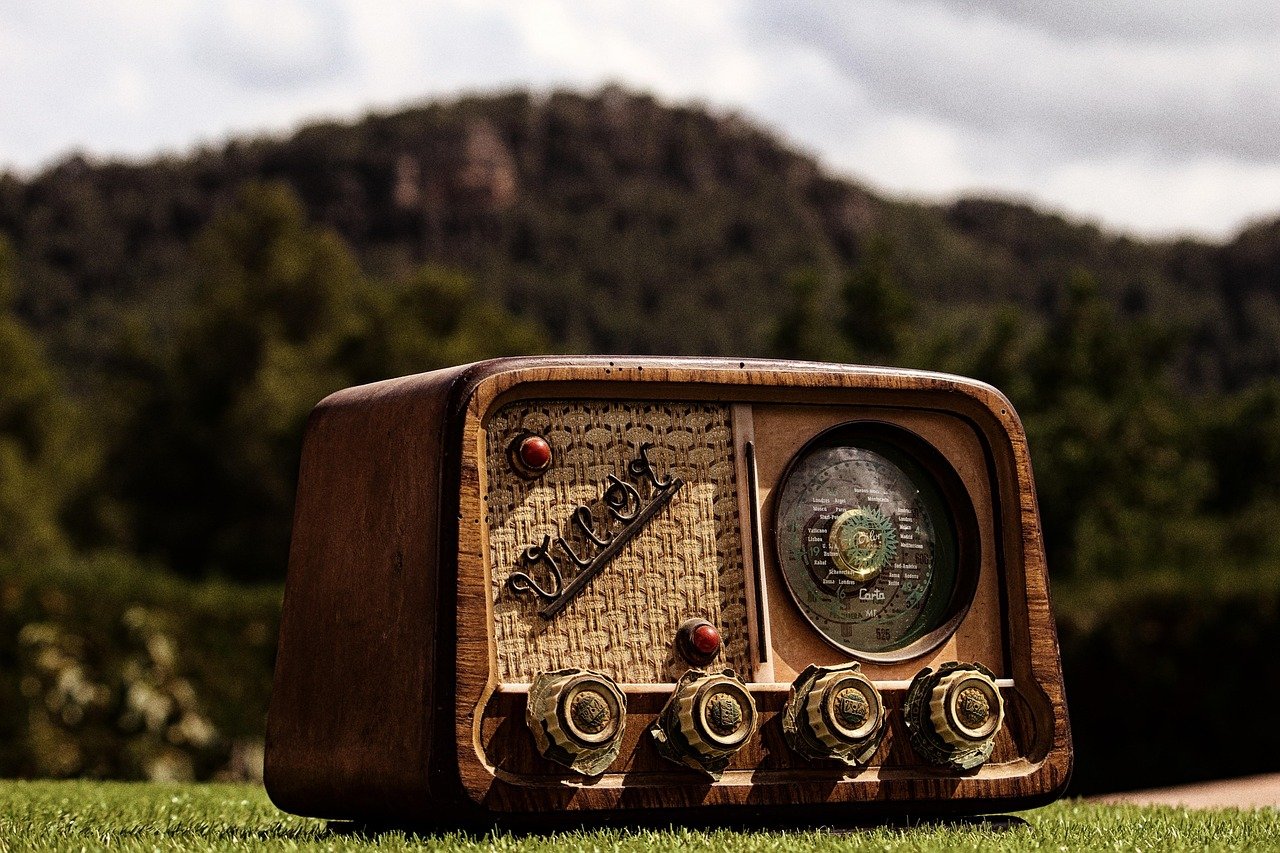
The Forgotten Frequencies
Imagine tuning into crackling frequencies, the static intertwining with familiar voices and timeless shows. Each turn of the dial offers a unique experience, inviting listeners to discover rare gems of captivating broadcasts. These lost airwaves echo the nostalgia of a time when radio was an everyday form of entertainment and connection. The forgotten airwaves belong to a time when radio wasn’t just background noise—it was an experience. It was the glow of a dial late at night, the sound of a booming voice cutting through static, and the feeling that the host was talking directly to you and no one else.
Radio used to have personality, character, unpredictability, and edge. DJs weren’t just reading playlists; they were guiding listeners through music, comedy, news, controversy, and culture. The callers mattered, the community mattered, and the stories lived long after the broadcast ended. In those days, radio was alive—raw, human, and intimate. Today, the golden era sits like a ghost on the dial, remembered by those who can still hear the echoes of what it once was.
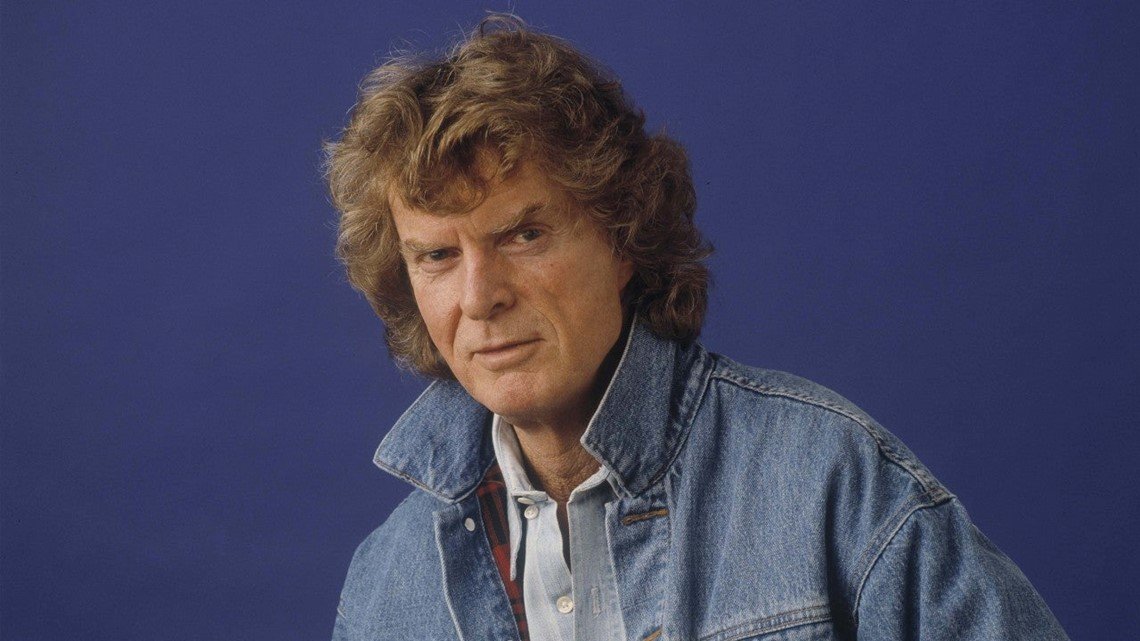
Don Imus
Don Imus was one of the most influential—and controversial—figures in American radio history, known for blending talk, comedy, politics, and shock-value entertainment.
He began his career in the 1960s as a disc jockey, gaining attention for his edgy, irreverent style. His biggest success came with Imus in the Morning, which launched nationally in the 1970s and became a staple of morning radio, especially on WFAN in New York. The show mixed interviews, satire, and commentary, attracting major political figures, journalists, and celebrities.
Imus was a pioneer of “shock jock” radio, helping pave the way for personalities like Howard Stern. At his peak, his program was simulcast on MSNBC, expanding his reach beyond radio.
Beyond radio, Imus was known for philanthropy, particularly his Imus Ranch, which provided support for children with cancer and serious illnesses.
He retired in 2018 and passed away in 2019, leaving behind a legacy as a trailblazer who helped shape modern talk radio—both admired for his influence and criticized for his provocations.
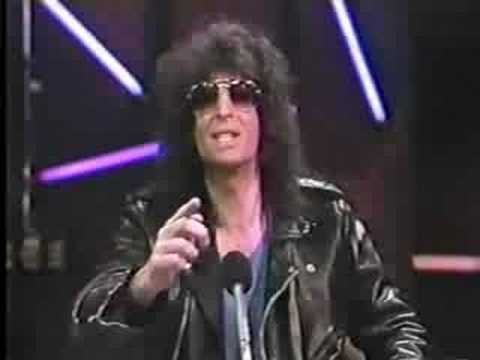
Howard Stern
Howard Stern built one of the most influential—and controversial—careers in broadcasting history by completely redefining what radio could be.
He started in the 1970s, working at smaller stations before gaining attention in the early ’80s with his raw, unfiltered style. His big break came in New York at WXRK (K-Rock), where The Howard Stern Show became a ratings powerhouse. Stern branded himself the “King of All Media,” mixing shock humor, celebrity interviews, and brutally honest commentary that pushed FCC boundaries. His battles with the Federal Communications Commission over indecency fines only increased his notoriety.
In the 1990s, Stern expanded beyond radio. He released best-selling books like Private Parts and starred in its 1997 film adaptation, which was both a critical and commercial success. He also made waves with TV appearances, including his edgy Channel 9 show in New York, further cementing his mainstream fame.
A major turning point came in 2006 when Stern left terrestrial radio for satellite, signing a groundbreaking deal with SiriusXM. Free from FCC restrictions, his show became even more candid and evolved into longer-form, in-depth interviews with major celebrities, politicians, and artists.
Over time, Stern’s persona shifted. While still provocative, he moved away from purely shock-driven content toward more introspective conversations and personal storytelling. His later career earned him renewed respect as a skilled interviewer, highlighted by widely praised interviews with figures across entertainment and politics.
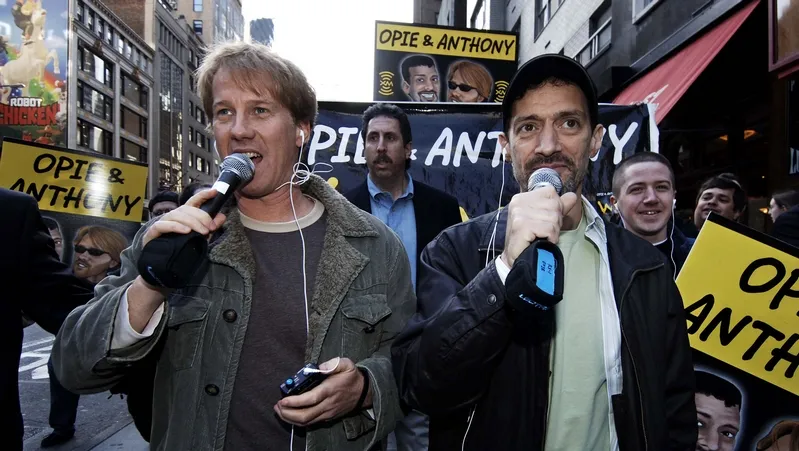
Opie And Anthony
Opie and Anthony was a controversial and highly influential talk radio show hosted by Gregg “Opie” Hughes and Anthony Cumia, later joined by comedian Jim Norton. Known for its raw, unfiltered style, the show pushed boundaries with edgy humor, celebrity interviews, and outrageous stunts.
It began in the mid-1990s and gained major attention during its run on WNEW-FM in New York. The show frequently clashed with management and regulators, most notably after the infamous “Sex for Sam” stunt in 2002, which led to their firing after a live broadcast from St. Patrick’s Cathedral.
After a hiatus, they made a major comeback on XM Satellite Radio in 2004, where they found more freedom away from FCC restrictions. This era is often considered the peak of the show, featuring appearances from major comedians like Louis C.K., Bill Burr, and Patrice O’Neal, helping shape modern comedy podcast culture.
The show ended in 2014 after Anthony Cumia was fired over controversial social media posts. Gregg Hughes continued briefly with a rebranded show, while Jim Norton moved on to other radio and podcast projects.
Overall, Opie and Anthony left a lasting mark on radio and podcasting with its fearless, anything-goes format, influencing a generation of comedians and broadcasters—even as it remained polarizing throughout its run.
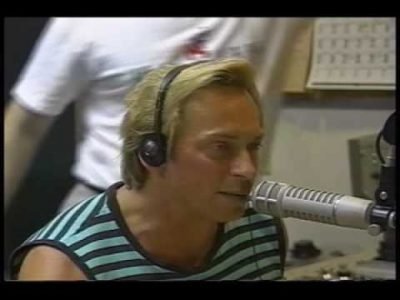
The Greaseman
Doug Tracht—better known as “The Greaseman”—was a controversial and influential American radio shock jock, especially prominent in the 1980s and early 1990s.
He built his reputation on loud, absurd, and often outrageous humor, mixing prank calls, exaggerated characters, crude jokes, and rapid-fire sound effects. His style was chaotic and high-energy, aimed at grabbing attention and pushing boundaries—similar in spirit to other shock jocks like Howard Stern and Don Imus, though often considered even more unpredictable.
The Greaseman found major success in markets like Washington, D.C., where his show drew big ratings. However, his career was repeatedly derailed by controversy, particularly due to offensive remarks and insensitive comments.
After that, his mainstream radio presence declined significantly, though he continued working in smaller markets and maintained a cult following among fans of old-school shock radio.
In short: The Greaseman was a major figure in the rise of shock jock radio—funny to some, offensive to others—whose career ultimately suffered because of the very edge that made him famous.
©12amhostility Proudly powered by NAMO